Let AI Read the Contract. Don't Let It Negotiate.
A model that flags a contract deviation in seconds is useful. A model that drafts and sends a counter-proposal on its own is a different kind of risk.
Confidence: hypothesis. The research below is real and cited. The organizational argument is this piece's own position, not a finding the research proves on its own. Argue with it.
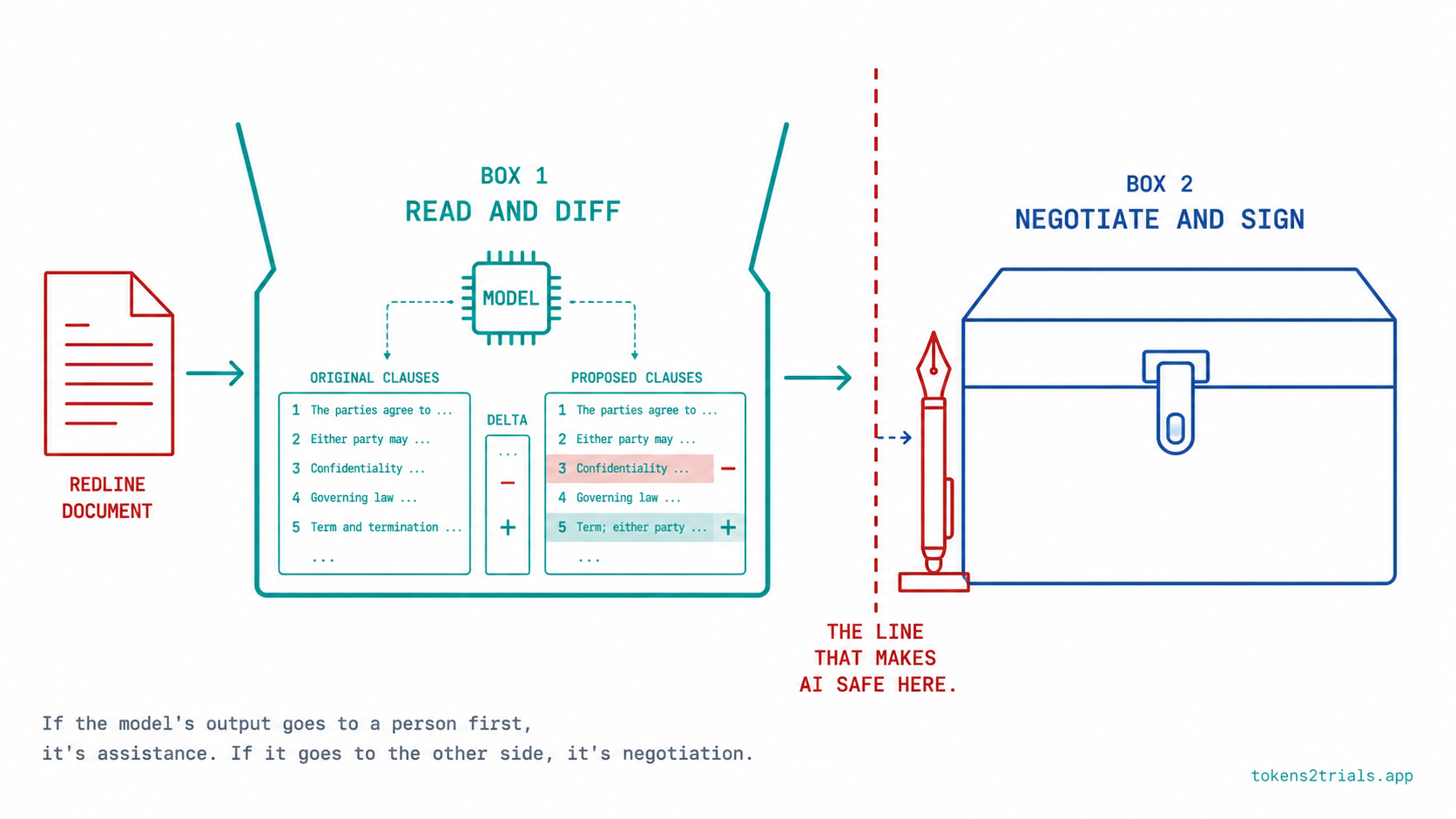
A model that reads a hundred-page site contract and tells you, in ten seconds, exactly which three clauses deviate from your standard terms is doing something genuinely useful. A model that then drafts a counter-proposal and sends it to the site's counsel, on your behalf, without a person reading it first, is doing something else entirely. The line between those two is not a matter of degree. It is the whole boundary that makes AI safe to use in contract work at all.
The clinical why
Study startup runs on contracts, and contracts run on relationships that outlast any single trial. A site's willingness to prioritize your next study, push back the queue for a competitor's trial, or extend a courtesy on a tight timeline depends on how it remembers working with you. Negotiation is not just the mechanism that produces a signed document. It is also, every time it happens, evidence to the other party about who you are to do business with.
This pattern is one piece of a longer treatment. The full essay is issue 7 of Stage × AI, a series walking the entire clinical-trial lifecycle stage by stage — what each stage really does, where AI helps, where it must not go, and one buildable pattern per stage:
full essayEvidence in, evidence out. Corrections welcome.